Driving is so important to older adults. It helps them to stay socially connected, helps them to experience independence, it reduces risk of depression and isolation, and so much more.
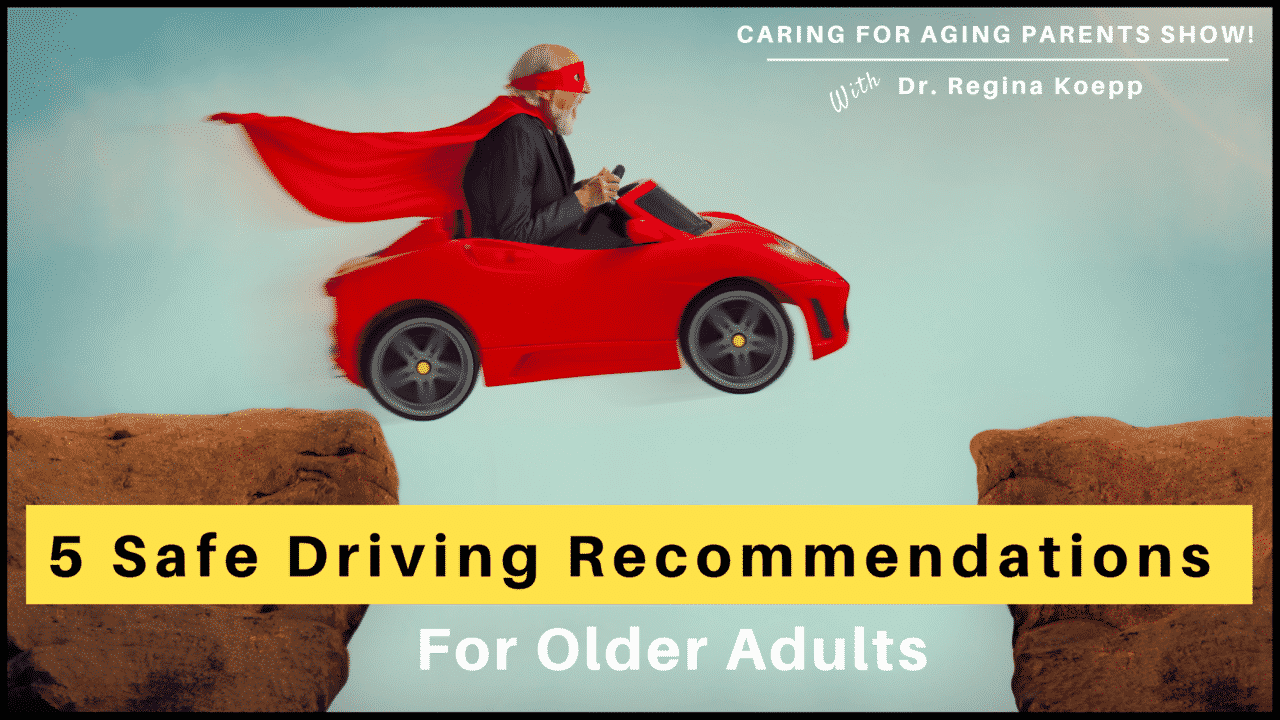
There are so many good reasons that older adults want to drive for as long as possible. So in today’s episode, I will share 5 tips for helping your aging parent drive safely for as long as possible.
In my work with older adults and families, I have found several resources to help older adults not only remain driving, but do so safely. I’m delighted to share them with you!
1. Get Educated
The first step in helping your parent to remain driving safely as long as possible is to help them get educated. There are several really good online resources to provide education to help your aging parents remain driving safely. Here are my three favorites:
- NHTSA has downloadable, easy to read documents on how various medical conditions (like dementia, arthritis, diabetes, etc) can affect driving. Link to them here!
- AAA has loads of resources and educational information online regarding Older Adults and driving. Check out their Senior Driving Website!
- AARP offers tips on safe driving as you age– Check ’em out!
2. Ask Your Parents To Assess Themselves
Ask your parents to assess how they’re doing for themselves. There are also free online resources that help older adults to quiz themselves on their vision, and reaction time, and physical changes, and so many other things. Check them out!
- NHTSA Link to Driving Safely Self Assessment
- AAA’s Self Rating Tool (Downloadable Brochure by AAA -will download directly)
3. Adapt The Car to Make Sure It Fits Your Parent.
Okay, three. It’s really helpful to adapt the car to make sure it fits your parent well. Here are two options:
- CarFit: CarFit is a free educational program created by the American Society on Aging and developed in collaboration with AAA, AARP and the American Occupational Therapy Association, in which a trained technician or occupational therapist assesses how your parent is sitting in their driver’s seat to make sure that they have the ideal “fit” in for maximum comfort, visual range, and safety. Find a CarFit near you it’s FREE!
- Adapt the Car: If your aging parent has a new disability (often as a result of medical problems), their car may adapted to help them drive safely for longer. For instance, say mobility is an issue, cars can be adapted with swivel seats or hand controls (you may have to pay for these modifications). Learn more here!
4. Encourage Your Parent to Take a Safe Driving Course.
You might’ve heard of safe driving courses for teenagers or young adults, and they can also be very helpful for older adults and your aging parents. Even if your aging parent is an expert driver or an experienced driver, they may still benefit from a safe driving refresher. In these courses, your parents will learn driving and age specific information, like how to accommodate age related changes in vision, hearing, and reaction time, like how the effects of medication might affect their driving, and so on.
The AARP Smart Driver™ course, is the nation’s first and largest refresher course designed specifically for drivers age 50 and older and it’s pretty affordable. Plus, presenting a certificate of completion to your parents’ auto insurance may lower their rate. I mean, who doesn’t want more money in their pocket, right? Learn more here!
5. Ask Your Parent to Take a Professional Assessment
In some cases, it will be important to have a professional assess your parents’ ability to drive safely. This can be especially helpful if you and your parent don’t see eye to eye on their ability to drive. The downside of professional assessments is that they can be costly.
AAA offers a very helpful guide to finding these resources near you/your parents! Link here!
Occupational Therapists (OT) tend to be the experts in driving assessment. You can go straight to the source and find an OT group here (in their search engine you can look for programs for drivers over 65 as well as for new drivers! Perfect if you’re in the sandwich)!
In wrapping up, it is important to remember that most older drivers are actually pretty safe on the road.
Driving offers valuable access to the community, healthcare, and friends and family. It keeps older adults healthier and less depressed.
Talking with your aging parent about driving and planning for a time that they are no longer driving is incredibly difficult. The more you can prepare yourself for these important conversations the better. So don’t stop here.
Join me each week for more tips on caring for your aging parents.
It’s important to acknowledge that driving is a really complicated issue for many people with aging parents. Because of this, I created a free Caring for Aging Parents Roadmap to Safe Driving that you can download for free here.

Lots of love to you and your family,
Regina
P.S. Share this blog with your friends who are caring for their aging parents. Because, nobody should have to do this caregiving-thing alone!
Check out these related episodes:
- Older Adults and Driving! Why is Driving So Important to Seniors (Ep #013)
- Safe Driving Recommendations for Older Adults! 5 Tips (Ep #014)
- Is My Aging Parent Safe To Drive? 10 Driving Warning Signs (Ep #015)
- Helping Aging Parents Plan for Driving Retirement! (Ep #016)
- How To Find Transportation For Seniors! 7 Strategies! (Ep #017)
- Helping Older Adults Try Out Transportation! 5 Tips! (Ep#018)
- Talking With Older Adults About Stopping Driving Without Pushing Them Away! (Ep #019)

Dr. Regina Koepp is a board certified clinical psychologist, clinical geropsychologist, and founder and CEO of the Center for Mental Health & Aging: the “go to” place for mental health and aging. Dr. Koepp is a sought after speaker on the topics of mental health and aging, caregiving, ageism, resilience, intimacy in the context of life altering Illness, and dementia and sexual expression. Dr. Koepp is on a mission to ensure mental health and belonging for older adults, because every person at every age is worthy of healing, transformation, and love. Learn more about Dr. Regina Koepp here.
Regina Koepp, PsyD, ABPP




























































































Want More? Read Our Most Recent Posts


Older adults deserve high quality mental health care.
Therapists deserve the training to provide that care.