Mental Health

Loading categories...

Recently, a 73-year-old journalist reached out with a question I hear often in my work as a geropsychologist, but rarely see reflected in our culture: what do we do with the grief that comes with aging? She told me she’s known grief in the ways…

Read More

Living alone is a choice many of us treasure—the independence, the comfort of familiar surroundings, the dignity of managing our own daily rhythms. But what happens when dementia enters this picture? As a geropsychologist who has worked with thousands of older adults navigating cognitive changes,…

Read More

Social Withdrawal or Healthy Social Selectivity? Your 83-year-old client’s daughter calls you concerned that her mother just quit her book club after three years and is concerned that her mom will now be isolated and lonely, what’s your first clinical hypothesis? Social withdrawal? Depression? Cognitive…


Read More

If you work with older adults, you’ve probably heard this question more times than you can count: “What can I do to keep my brain healthy?” The Global Council on Brain Health (GCBH) offers some of the most trustworthy, plain-English answers. Convened by AARP (with…

Read More

  Suicide Risk Spikes After a Dementia Diagnosis: Here’s Why Receiving a dementia diagnosis changes everything. For many people, it brings relief—finally, there’s an explanation for the confusion, memory lapses, or personality changes that have been happening. But for others, especially in the first months…
Read More

  When we think about trauma, we often imagine its effects on younger people—children, teens, or adults in midlife. But what about people 65 and older? The truth is trauma does not simply vanish with time. In fact, trauma among older adults is often undetected,…

Read More

When an older loved one completes alcohol detox and enters a medical rehab program, families often feel a swirl of emotions: relief, hope, fear, and sometimes overwhelm. You may find yourself asking: How do we best support them right now? What’s really causing their symptoms—withdrawal,…

Read More

What does it really take to build a national movement for mental health and aging? If you’ve ever had a big dream or felt a deep calling to change the world—especially for older adults—you know that the path to change is rarely straight, easy, or…

Read More

Up to 1 in 5 older adults lives with a mental health condition like depression, anxiety, or substance use disorder. And yet—most go undiagnosed and untreated. Why? Because too often we only focus on the body and neglect the mind and soul. The truth is:…

Read More

Loneliness and social isolation can be as damaging to our health as smoking 15 cigarettes a day. While it may surprise some, research shows that older adults have lower rates of loneliness than younger people, but the impact on their well-being is far more profound​.…

Read More

20-22%  of older adults live with a mental health condition such as depression, anxiety, substance use disorder, or a dementia-related disorder. Yet, the vast majority go undetected and untreated. Why? A complex web of misconceptions, systemic failures, and structural barriers keeps older adults from getting…

Read More

What kind of world are we living in where a person who needs assisted living—someone with dementia, functional disabilities, or frailty—can be detained by ICE?   A recent email from Lori Smetanka, Executive Director of the National Consumer Voice for Quality Long-Term Care, revealed that…

Read More

CEUs for psychologists, counselors, social workers, therapists, LMFTs, Aging Life Care Professionals, and more.

Take One of Our Top Rated CEU Courses

Find a therapist who specializes with older adults and caregivers from our nationwide therapist directory.

Find a Therapist

browse ce coursesfind a THERAPIST

Older adults deserve high quality mental health care.

Therapists deserve the training to provide that care.

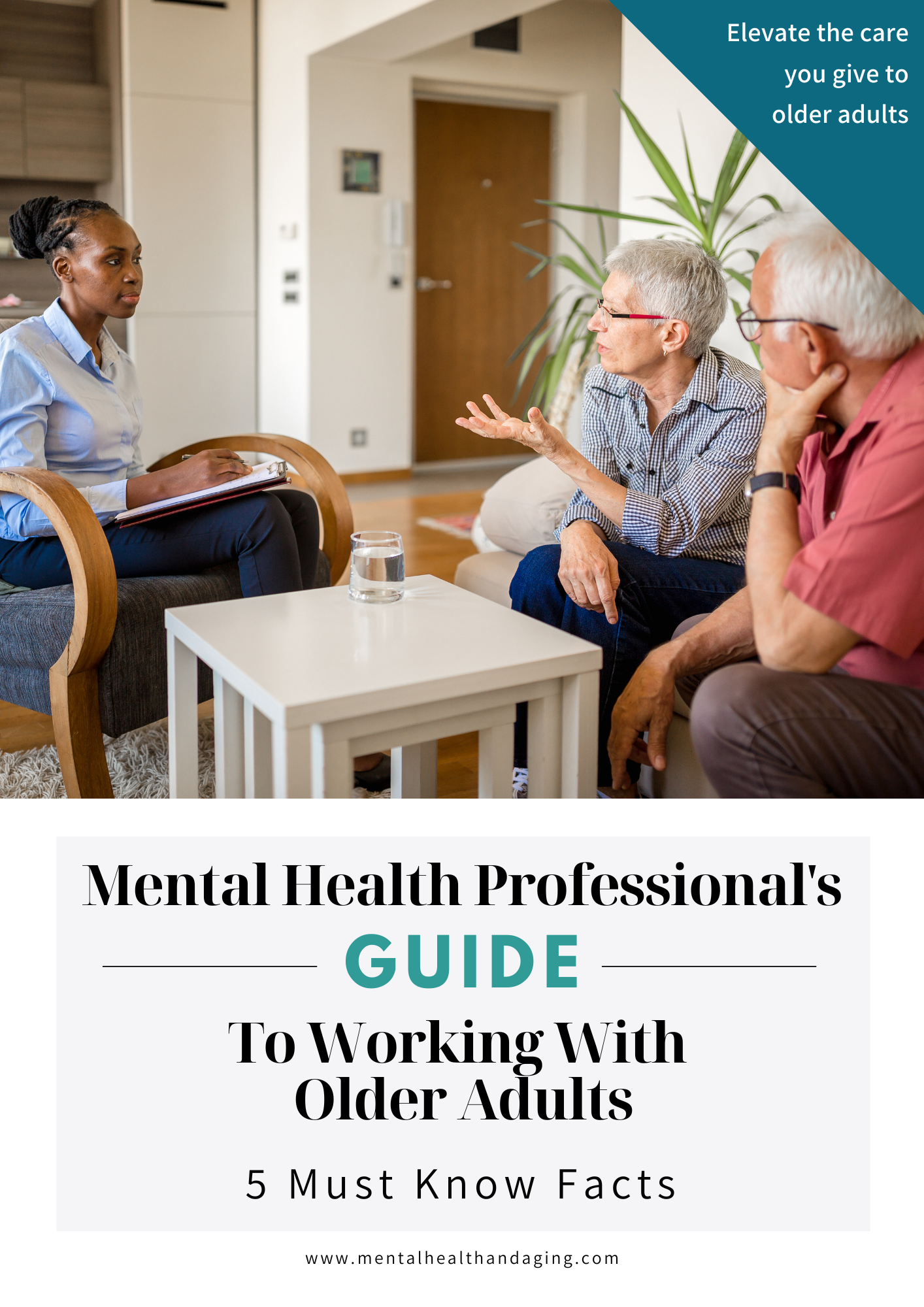
Download your free Clinician’s Guide to Working with Older Adults

Free Guide