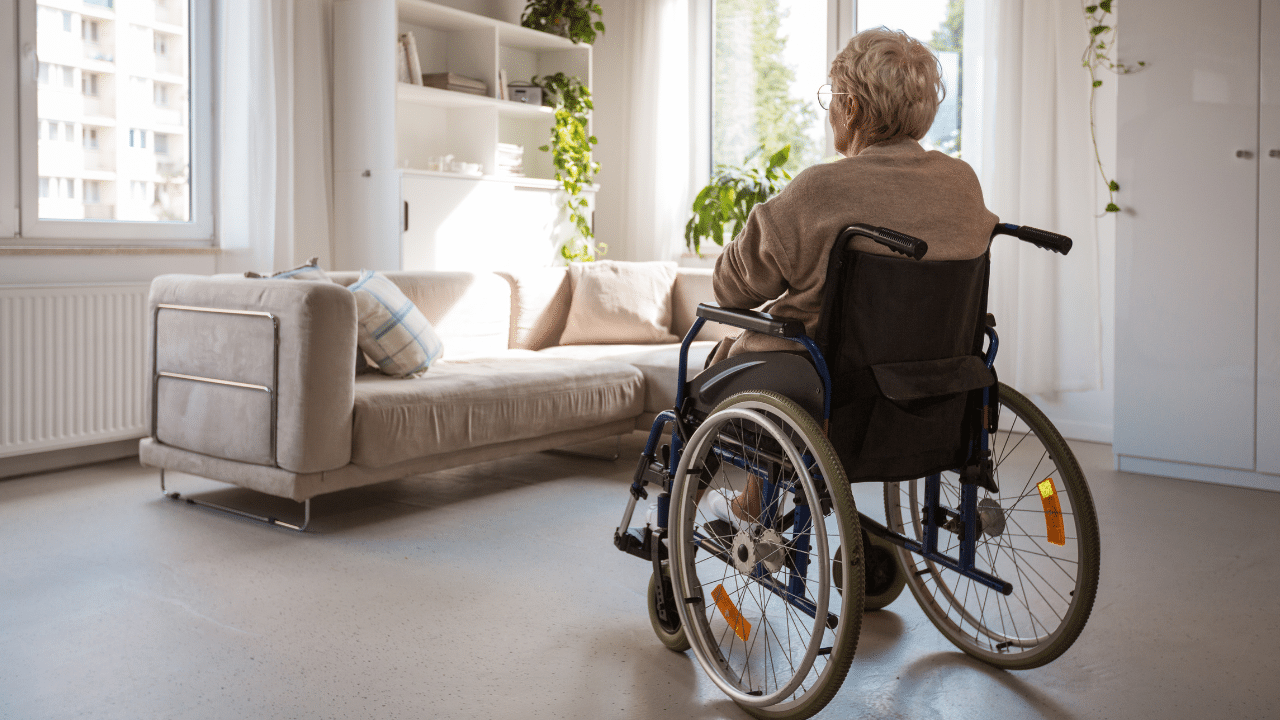
“I feel like I’m doing time for a crime I never committed.”
That’s what one of my older patients said to me in our very first session after he was moved unexpectedly from his home into assisted living. He wasn’t exaggerating. He wasn’t being dramatic. He was telling me exactly how he felt.
If you work with older adults, you’ve probably heard something like this. And if you haven’t yet, you will. When that moment comes, I want you to be ready with the clinical language, the conceptual framework, and the therapeutic tools to actually help.
What this person was describing has a name: Transfer Trauma.
What Is Transfer Trauma?
Transfer trauma — also called Relocation Stress Syndrome (RSS) — is a recognized pattern of emotional, cognitive, behavioral, and functional disruption that can follow an older adult’s move from one care setting to another. This is especially true when the move is involuntary, sudden, poorly prepared, or excludes the older adult from the decision-making process (Manion & Rantz, 1995; Scott et al., 2025).
In geriatric practice, transfer trauma is best understood not as a simple reaction to change, but as a multi-dimensional response to profound loss — loss of home, autonomy, identity, familiar relationships, and the predictable rhythms of daily life (Brownie et al., 2014; Scott et al., 2025).
Transfer trauma is most often seen when older adults move from:
- Home to assisted living or memory care
- Independent living to a nursing home
- Hospital to a long-term care facility
- One care unit to another within the same facility
Transfer trauma deserves its own clinical category — not as a footnote to general adjustment, but as a distinct, identifiable syndrome with real consequences for older adults’ mental and physical health.
Four core processes drive relocation stress syndrome (Brownie et al., 2014; Sullivan & Williams, 2017; Scott et al., 2025):
- The abrupt loss of familiar place and daily routine
- Diminished self-determination and personal control
- Disruption of attachment bonds — to people, places, and meaningful objects
- Threats to personal identity and a sense of meaning
For many residents, this is not experienced as simply moving to a new address. It’s experienced as a forced crossing into a different chapter of life — one they didn’t choose and may not be ready for.
A Note on Deception
Families sometimes deceive older adults about a move thinking it will make things easier on everyone — a trip to the doctor that doesn’t end at home, or a temporary stay that was never actually temporary. This strategy rarely makes things easier and often comes with many consequences.
Deception doesn’t allow the person time to prepare, engage in anticipatory coping, and shared decision-making that buffer relocation stress, and layers an experience of betrayal on top of an already destabilizing transition (Scott et al., 2025). The result is often intensified agitation, despair, refusal to engage, and deep difficulty forming trust in the new setting.
In Their Own Words: The Lived Experience of Residents Living with Transfer Trauma
In a recent study (Scott et al, 2025), researchers asked older adults to describe what it was like to live in long-term care.
Resignation
The language residents used was not the language of adjustment, it was often the language of resignation:
“I suppose I don’t really want to be here, but I have no choice in the matter. I’m here whether I like it or not. I’m not happy about it.” (p. 6)
“I mean I put up with it. Accept is a sort of stronger word… I put up with it, but I don’t like it.” (p. 6)
These aren’t quotes from people in acute crisis. These are people who have adapted — behaviorally. But behavioral compliance is not the same as emotional integration, and as clinicians, we know the difference.
Identity Ruptures
Residents also described something that goes even deeper than grief: identity rupture.
“This is not really me. I’m not really… All of me [is not] here. Part of me is somewhere else.” And later: “To me it’s rather as if I lost myself.” (p. 7)
Complex Emotional, Relational, and Psychological Experiences
Another resident described residential care as a ‘regimented, almost prison-like existence‘ (p. 6) — language that echoes my own patient’s words at the beginning of this article.
Across cultural contexts, when the move is not experiences as chosen or collaborative, the resident often experiences the transition as betrayal, abandonment, resentment, and rejection (de Guzman et al., 2012; Sussman & Dupuis, 2014; Zamanzadeh et al., 2017).
Transfer trauma can contain elements of grief, attachment rupture, moral injury, and identity threat — not simply adjustment difficulty.
How Transfer Trauma Presents: Symptoms and Clinical Presentation
Transfer trauma shows up across emotional, cognitive, behavioral, and physical domains (Manion & Rantz, 1995; Scott et al., 2025). Knowing the full picture helps us avoid misattributing distress to dementia progression or pre-existing psychopathology.
Emotional and Psychological Symptoms
- Depression, sadness, despair
- Anxiety and fear
- Grief and profound sense of loss
- Feelings of abandonment, resentment, or betrayal
- Worsening loneliness
Cognitive and Behavioral Symptoms
- Confusion or disorientation
- Withdrawal from activities and relationships
- Refusal of care
- Repeated requests to go home
- Resistance, irritability, or increased agitation
- Seeming abrupt cognitive decline
Physical Symptoms
- Sleep disturbance
- Changes in appetite
- Increased dependency in Activities of Daily Living (ADLs)
It’s important to note that in frail older adults and in those living with dementia disorders, behavioral expressions are often the language of distress (Polacsek & Woolford, 2022; Scott et al., 2025).
The person may not say ‘I am grieving.‘ Instead, they may refuse breakfast, stop going to bingo, or ask every single day when they are going home. This might be how transfer trauma is manifesting.
Who Is Most at Risk for Transfer Trauma?
Not every move leads to transfer trauma — but certain circumstances make it far more likely. Research consistently identifies the following risk factors (Brownie et al., 2014; McKechnie et al., 2018; Scott et al., 2025; Wilson, 1997):
- Crisis-driven relocation: Moves following sudden hospitalization, falls, or rapid health decline leave little time to prepare, grieve, or participate in decisions.
- Exclusion from decision-making: Residents who felt they ‘had no choice’ were significantly more likely to experience resentment, homesickness, and difficulty settling.
- Cognitive impairment, depression, or frailty: These reduce a person’s coping reserve and capacity to adapt
- Rigid institutional environments: Assigned seating, inflexible routines, and limited personal control amplify the sense of lost autonomy.
- Repeated or multiple transfers: Especially when connected to payer disruption, hospital discharge, or facility closures.
- Deception or coercion: Families or systems that obscure the nature or permanence of a move strip away the older adult’s opportunity to prepare and participate.
Involuntary or poorly prepared moves confer significantly greater risk for Transfer Trauma than moves in which the older adult retains agency and voice.
How Therapy Can Help: The Clinician’s Role
Now that we know how deeply impactful transfer trauma is, it’s critical that we lean in, provide assessment and offer help with the adjustment and coping.
Leaving people alone with this level of distress creates another assault to the person’s identity and dignity as it implies that their pain is invisible. The absence of professional support does not mean the suffering stops — it means the person suffers without anyone to help them make sense of it or find their way through.
Psychotherapy has a meaningful and important role to play. And you — the therapist who shows up, who names what is happening, who stays present in the pain — are not a nice extra. You are essential.
Therapists are not a nice-to-have in long-term care settings. We are an essential part of what helps older adults survive and sometimes even reclaim a sense of self after one of the most disorienting transitions of their lives.
Assessing for Transfer Trauma: What to Ask
Transfer trauma should be considered whenever an older adult shows emotional or functional deterioration after a move, especially when the move was unwanted, rushed, or not transparent (Brownie et al., 2014; Scott et al., 2025). A thorough assessment includes (Polacsek & Woolford, 2022; Scott et al., 2025):
- The circumstances of the move — was it sudden? voluntary? planned?
- The person’s role in the decision — did they have a voice?
- Losses associated with the transition — what was left behind?
- Sleep, appetite, and physical changes since the move
- Social engagement — are they withdrawing?
- Orientation and cognitive changes
- Sense of identity — do they still feel like themselves?
- The degree to which the current environment supports autonomy and belonging
What Therapy Can Address
At its core, therapy for transfer trauma focuses on (Polacsek & Woolford, 2022; Scott et al., 2025):
- Naming what happened — giving the experience a clinical frame that validates rather than minimizes
- Treating co-occurring depression, anxiety, or grief
- Supporting meaning-making and continuity of identity
- Helping restore a sense of control, even within an institution.
- Processing feelings of abandonment, betrayal, or loss
- Supporting family relationships and communication
Evidence-Based Therapeutic Approaches
A range of interventions can be adapted for this population (Davison et al., 2022; Polacsek & Woolford, 2022; Scott et al., 2025):
- Grief-focused psychotherapy: For the accumulated losses — of home, role, relationships, independence
- Supportive-expressive therapy: Creating space to feel and articulate what has happened
- Behavioral activation: Re-engaging with life, even in a changed environment
- Problem-solving: Identifying areas where choice and control remain possible
- Life review and reminiscence: Restoring continuity of self and narrative
- Dignity-conserving interventions: Affirming personhood and worth
- Family therapy: Improving transparency, reducing conflict, and healing ruptures caused by the transition
Working With Residents With Dementia
For residents with dementia or limited verbal capacity, insight-oriented approaches may not be an option. Instead consider (Polacsek & Woolford, 2022; Scott et al., 2025):
- Environmental modification to reduce disorientation and increase comfort
- Validation approaches that meet the person where they are
- Staff coaching and consultation to improve relational care
- Sensory comfort and relational reassurance
- Repetition, consistency, and familiar objects from home
Social and Relational Approaches
Research tells us that residents fare better when they can create a homelike space with cherished belongings, preserve meaningful routines, maintain the ability to say no to unwanted activities, form new connections, and contribute to others’ wellbeing (Scott et al., 2025).
These coping strategies map directly onto the three core psychological needs identified by Self-Determination Theory: autonomy, relatedness, and competence (Deci & Ryan, 2000). Therapy that supports those needs, even in small ways, can be incredibly rewarding, and help a person reclaim a sense of self in the midst of change.
Consultation to Long-Term Care Settings Related to Transfer Trauma
Transfer trauma is not only an individual mental health issue. It’s a systems issue — shaped by admission practices, how facilities communicate, how daily routines are structured, and how much organizations actually preserve autonomy and personhood (Polacsek & Woolford, 2022; Scott et al., 2025).
As clinicians, we can do meaningful work beyond direct therapy by consulting with long-term care organizations. That work might include:
- Identifying residents at highest risk for difficult transitions — especially those admitted after sudden illness or hospitalization
- Advising teams on transparent, honest, non-deceptive communication with incoming residents and families
- Recommending early psychosocial assessment as a standard of care
- Training staff to recognize withdrawal, agitation, refusal, or repeated requests to go home as possible manifestations of transfer trauma — not just ‘behavior problems’
- Helping facilities develop transition protocols that prioritize resident voice, familiar objects, family involvement, continuity of relationships, and meaningful activity in the first weeks after admission
These are not peripheral quality-of-life issues. They are central prevention strategies for transfer trauma — and our expertise as mental health clinicians is directly relevant to every one of them.
5 Key Clinical Takeaways
In wrapping up, I want to summarize five key clinical takeaways as it relates to Transfer Trauma or Relocation Stress Syndrome.
- Transfer trauma is real, common, and clinically consequential. It deserves our serious attention
- Exclusion, coercion, and deception make it worse. Preparation, voice, and transparency are protective
- Symptoms often appear as behavior, not words. Withdrawal, refusal, agitation, and decline are often the language of distress
- Residents cope better when they have voice, control, connection, and meaning. Therapy can support all four
- We have an important role — and leaving people alone with this suffering is harmful. Therapists can help not only through direct treatment, but also by shaping how long-term care systems receive and respond to people in transition
When my patient told me he felt like he “was doing time for a crime he never committed”, what he needed wasn’t just a sympathetic ear. He needed someone who could hold the reality of what happened to him, help him grieve it, and walk alongside him as he tried to find some small pieces of himself in a place that didn’t yet feel like his.
That is our work. And it matters more than we sometimes realize.
The older adults who land in our offices — or on our caseloads in facilities — after these wrenching transitions are often in the most vulnerable and overlooked moments of their lives. Families are overwhelmed. Staff are stretched. The system rarely pauses to ask the person living the experience: How are you really doing with this big move? What has it been like for you?
As therapists, we can be the ones who ask. We can be the ones who listen. We can be the ones who help them find their footing in unfamiliar ground, and let them know that they’re not alone with this painful transition.
Related Courses & Continuing Education
If this article resonated with you, join me for my upcoming course on Therapy Across the Stages of Dementia from Individual to Caregiver Family Therapy (6 CE Credits)
Related Articles
- Separation Anxiety in Older Adults: What Every Clinician Needs to Know
- Aging Parent Calling Too Many Times a Day? 5 Next Steps
- Do Caregivers Really Die Before Their Loved Ones? What The Science Actually Says
- Grieving Someone Who’s Still Alive: Understanding Ambiguous Loss
References
- Amare, A. T., Caughey, G. E., Whitehead, C., Lang, C. E., Bray, S. C., Corlis, M., Visvanathan, R., Wesselingh, S., & Inacio, M. C. (2020). The prevalence, trends and determinants of mental health disorders in older Australians living in permanent residential aged care: Implications for policy and quality of aged care services. Australian & New Zealand Journal of Psychiatry, 54(12), 1200–1211. https://doi.org/10.1177/0004867420945367
- Brownie, S., Horstmanshof, L., & Garbutt, R. (2014). Factors that impact residents’ transition and psychological adjustment to long-term aged care: A systematic literature review. International Journal of Nursing Studies, 51(12), 1654–1666. https://doi.org/10.1016/j.ijnurstu.2014.04.011
- Davison, T. E., McCabe, M. P., Busija, L., & Graham, A. (2022). Program to enhance adjustment to residential living (PEARL): Effect on adjustment, anxiety, quality of life, and stress. Clinical Gerontologist, 45(5), 1117–1129. https://doi.org/10.1080/07317115.2022.2100729
- de Guzman, A. B., et al. (2012). Who says there is no life after abandonment? A grounded theory on the coping of abandoned Filipino elderly in nursing homes. Educational Gerontology, 38(12), 890–901. https://doi.org/10.1080/03601277.2012.661329
- Deci, E. L., & Ryan, R. M. (2000). The ‘what’ and ‘why’ of goal pursuits: Human needs and the self-determination of behavior. Psychological Inquiry, 11(4), 227–268. https://doi.org/10.1207/S15327965PLI1104_01
- Gardiner, C., Laud, P., Heaton, T., & Gott, M. (2020). What is the prevalence of loneliness amongst older people living in residential and nursing care homes? A systematic review and meta-analysis. Age and Ageing, 49(5), 748–757. https://doi.org/10.1093/ageing/afaa049
- Hawkley, L. C., & Cacioppo, J. T. (2010). Loneliness matters: A theoretical and empirical review of consequences and mechanisms. Annals of Behavioral Medicine, 40(2), 218–227. https://doi.org/10.1007/s12160-010-9210-8
- Manion, P. S., & Rantz, M. J. (1995). Relocation stress syndrome: A comprehensive plan for long-term care admissions. Geriatric Nursing, 16(3), 108–112. https://doi.org/10.1016/S0197-4572(05)80039-4
- McKechnie, R., Jaye, C., Hale, B., Tordoff, J., Robertson, L., Simpson, J., & Butler, M. (2018). Transition into care: Experiences of the elderly as they move to residential aged care. Sites: A Journal of Social Anthropology and Cultural Studies, 15(2), 16–39. https://doi.org/10.11157/sites-id379
- Meeks, T. W., Vahia, I. V., Lavretsky, H., Kulkarni, G., & Jeste, D. V. (2011). A tune in ‘a minor’ can ‘b major’: A review of epidemiology, illness course, and public health implications of subthreshold depression in older adults. Journal of Affective Disorders, 129(1–3), 126–142. https://doi.org/10.1016/j.jad.2010.09.015
- Melrose, S. (2013). Relocation stress in long term care: How staff can help. Athabasca University. https://auspace.athabascau.ca/handle/2149/3330
- Polacsek, M., & Woolford, M. (2022). Strategies to support older adults’ mental health during the transition into residential aged care: A qualitative study of multiple stakeholder perspectives. BMC Geriatrics, 22, 151. https://doi.org/10.1186/s12877-022-02859-1
- Scott, S., Raynor, A., Dare, J., Grieve, J., & Costello, L. (2025). ‘I’m here whether I like it or not’: A focused ethnographic description of transition into residential aged care. SAGE Open, 15(4), 1–14. https://doi.org/10.1177/21582440251378269
- Sullivan, G. J., & Williams, C. (2017). Older adult transitions into long-term care: A meta-synthesis. Journal of Gerontological Nursing, 43(2), 41–49. https://doi.org/10.3928/00989134-20161109-07
- Sussman, T., & Dupuis, S. (2014). Supporting residents moving into long-term care: Multiple layers shape residents’ experiences. Journal of Gerontological Social Work, 57(5), 438–459. https://doi.org/10.1080/01634372.2013.875971
- Wilson, S. A. (1997). The transition to nursing home life: A comparison of planned and unplanned admissions. Journal of Advanced Nursing, 26(5), 864–871. https://doi.org/10.1046/j.1365-2648.1997.00636.x
- Yong, B., Lin, R., & Xiao, H. (2021). Factors associated with nursing home adjustment in older adults: A systematic review. International Journal of Nursing Studies, 113, 103790. https://doi.org/10.1016/j.ijnurstu.2020.103790
- Zamanzadeh, V., Rahmani, A., Pakpour, V., Chenoweth, L., & Mohammadi, E. (2017). Psychosocial changes following transition to an aged care home: Qualitative findings from Iran. International Journal of Older People Nursing, 12(2), e12130. https://doi.org/10.1111/opn.12130
- Zizzo, G., Mackenzie, C., Irizarry, C., & Goodwin-Smith, I. (2020). Loss and grief: The experience of transition to residential aged care. Australian Journal of Social Issues, 55(4), 474–491. https://doi.org/10.1002/ajs4.105

Dr. Regina Koepp is a board certified clinical psychologist, clinical geropsychologist, and founder and CEO of the Center for Mental Health & Aging: the “go to” place for mental health and aging. Dr. Koepp is a sought after speaker on the topics of mental health and aging, caregiving, ageism, resilience, intimacy in the context of life altering Illness, and dementia and sexual expression. Dr. Koepp is on a mission to ensure mental health and belonging for older adults, because every person at every age is worthy of healing, transformation, and love. Learn more about Dr. Regina Koepp here.
Regina Koepp, PsyD, ABPP


























































































Want More? Read Our Most Recent Posts


Older adults deserve high quality mental health care.
Therapists deserve the training to provide that care.