
A dementia diagnosis is one of the most disorienting moments a person — or a family — can face. The fear is real. The uncertainty is real. And so is this: there are clear, concrete steps you can take right now to protect your health, build connection and community, and shape the kind of life and care you want going forward.
I’ve worked with people living with dementia and their families for more than 20 years. What I’ve seen again and again is that the people who do best aren’t the ones who got a perfect diagnosis or a perfect treatment plan. They’re the ones who didn’t face this alone. This guide is designed to help you get oriented, find support, and take meaningful action — starting now.
The people who do best aren’t the ones with perfect treatment plans. They’re the ones who didn’t face this alone.
Understanding Your Diagnosis
Dementia is a general term for changes in memory, thinking, and daily functioning caused by conditions such as Alzheimer’s disease, vascular dementia, Lewy Body Dementia, or Frontotemporal dementia. Getting clear on which type you have — and how mild or advanced it is — matters. It helps you anticipate what to expect and identify the most appropriate treatments and supports.
Ask your clinician for a written summary of your diagnosis, your current medications, and their recommendations. This gives you and your care partners something to refer back to over time, and it helps ensure nothing gets lost in the fog of an overwhelming appointment.
Early on, many people with dementia can still drive, work, volunteer, and handle most daily activities, even while noticing changes in memory or problem-solving. Learning about the condition early can reduce anxiety, improve coping, and help you stay independent longer. The National Institute on Aging (NIA) offers clear, evidence-based overviews of Alzheimer’s and related dementias, including fact sheets and videos, at nia.nih.gov/health/alzheimers-and-dementia.
Key resources for understanding your diagnosis:
- NIA’s Alzheimer’s and dementia information hub — evidence-based articles on types, symptoms, and treatments
- Alzheimer’s Association “You Are Not Alone” guide — planning checklists and coping tips for the newly diagnosed
- Alzheimer’s Society (UK) “Newly diagnosed with dementia” — practical, person-centered guidance useful well beyond the UK
Building Your Care Team and Support Network
You don’t have to do this alone — and you shouldn’t. A strong care team and support network are consistently associated with better quality of life and less distress for people living with dementia.
A core care team often includes a primary care clinician, a memory specialist (neurologist, geriatric psychiatrist, or geriatrician), and allied professionals like social workers, occupational therapists, and psychologists. Together, this team can address medical treatment, mood changes, safety, driving, and daily function — and connect you to community services like adult day programs, home care, and visiting nurses.
Psychological support matters as much as medical care. Clinical guidelines recommend support groups, counseling, and peer connection for people in the early stages of dementia. These supports reduce depression and help people adapt to their diagnosis. Early-stage groups — whether in-person or online — give you a space to process what’s happening with people who genuinely understand it.
Key resources for care and support:
- Alzheimer’s Association 24/7 Helpline (U.S.): 800-272-3900 — information, crisis support, and local referrals. alz.org/help-support/resources
- Alzheimer’s Association Community Resource Finder — searchable database for memory clinics, support groups, and local services
- ALZConnected — online community for people living with dementia and care partners
- Dementia Alliance International – Founded by people with dementia for people with dementia.
- Local Area Agency on Aging — connects you to local Area Agencies on Aging and dementia-specific programs
- Center for Mental Health + Aging Therapist Directory: Looking for a therapist who understands dementia? Find a Therapist who specializes with older adults in our National therapist directory.
Living Well Now: Health, Safety, and Daily Life
Research is clear that certain lifestyle strategies help people with dementia maintain function and quality of life longer — especially when started early. They include:
- Regular physical activity
- A heart-healthy diet (Mediterranean-style is well-studied)
- Cognitive and social engagement
- Consistent sleep routines all make a measurable difference.
- Treatment for depression, anxiety, substance use disorders, etc.
- Stress management
Large studies show that exercise can improve strength, balance, cardiovascular health, and even thinking abilities in people with cognitive impairment.
On a practical, everyday level:
- Keep a calendar or planner
- Simplify routines
- Use reminders for medications and appointments.
If you live alone, identify trusted friends or family members who can check in regularly, and consider sharing your diagnosis with neighbors you trust.
Planning for driving evaluations, home safety — fall prevention, medication management — and emergency plans is part of maintaining independence as long as possible. That’s not giving independence up. That’s protecting it.
Key resources for health and daily living:
- “What Can I Do To Keep My Brain Healthy – Get answers from the Global Council on Brain Health
- NIA: “Tips for Living Alone with Early-Stage Dementia” — practical safety and independence strategies
- Mayo Clinic dementia care guidance — day-to-day routines, communication, and managing behavioral changes
- Alzheimer’s Association early-stage living well tips — exercise, nutrition, social activity, and routine
Caring for Your Mental Health
A dementia diagnosis doesn’t only affect memory. It affects your whole sense of self — who you are, what your future looks like, and how you fit into the world you’ve built. The psychological adjustment to living with a dementia disorder is real and significant, and it deserves just as much attention as the medical side of your care.
Depression and anxiety are among the most common symptoms of dementia — not just reactions to it — and left untreated, they reduce quality of life and research shows they can accelerate cognitive decline.
Adjusting to a new diagnosis is hard, and for some people, the weight of that adjustment increases risk for suicide. If you or someone you know is having more thoughts about taking your life, please reach out: call or text 988 (the Suicide and Crisis Lifeline) anytime.
Mental health treatment isn’t a luxury here. It’s part of your care. If you’re looking for a therapist who actually understands dementia and aging, our National Therapist Directory connects you with clinicians who specialize in working with older adults — because finding someone who truly gets it makes all the difference.
Planning Ahead: Legal, Financial, and Care Decisions
Because dementia is progressive, early planning — while you can fully participate in decisions — is one of the most important things you can do. This means preparing or updating advance directives, naming a healthcare proxy or durable power of attorney, and talking through your preferences for living situation, long-term care, and end-of-life care. Doing this early makes it far more likely that your wishes will actually be followed.
Financial planning is equally important. Meeting with a financial adviser who understands long-term care, or an elder law attorney who can walk you through options like long-term care insurance and public benefits, can save enormous stress down the road. A social worker can also help you think through caregiving costs, potential home modifications, and future transitions to assisted living or memory care if and when those become relevant.
Key resources for planning:
- Alzheimers.gov: “Planning After a Dementia Diagnosis” — checklists for legal, financial, and care planning
- Alzheimer’s Association: Living with Alzheimer’s program — online and in-person planning education for people with Alzheimer’s and their families
- Local Area Agency on Aging — benefits counseling, care planning, and caregiver supports
Early planning — while you can fully participate in decisions — is one of the most important things you can do.
You Are Not Alone
Whatever you’re feeling right now — scared, overwhelmed, angry, or just numb — those feelings make complete sense. And you don’t have to move through this by yourself.
There is an entire community of people who have received this same diagnosis, who are living with it right now, and who have found their way to meaningful connection, quality of life, and even joy on the other side of that initial shock. There are clinicians, families, researchers, and advocates who have dedicated their lives to walking alongside people exactly where you are.
Reach out. Ask for help. Let people in. You are not alone.
A “Start Here” Resource Toolkit
Below is a practical toolkit you can share with clients, families, or use personally. It’s organized around the most common needs people have in the period right after a dementia diagnosis.
1. Core Information and Education
- National Institute on Aging — Alzheimer’s and dementia hub: fact sheets, videos, and clinical trial information
- Alzheimers.gov: “Planning After a Dementia Diagnosis”: step-by-step post-diagnosis guidance
- Alzheimer’s Association: “You Are Not Alone” PDF and “I Have Alzheimer’s” portal for the newly diagnosed
- Alzheimer’s Society (UK): “Newly Diagnosed with Dementia”: accessible, person-centered explanations and coping strategies
2. Connection and Peer Support
- Alzheimer’s Association 24/7 Helpline: immediate emotional support and resource navigation — alz.org/help-support/resources
- ALZConnected: online community for people living with dementia and care partners
- Local early-stage support groups, searchable via the Alzheimer’s Association Community Resource Finder
- Alzheimer’s Society Dementia Support Forum: online peer support
3. Apps and Digital Tools
- My ALZ Journey: free mobile app from the Alzheimer’s Association with guidance, tracking tools, and tailored resources — alz.org/help-support/resources
- Community Resource Finder: joint AARP/Alzheimer’s Association tool for locating programs and professionals
4. Local Community Services
- Eldercare Locator: find local senior centers, home- and community-based services, and dementia resources
- Local senior centers and adult day health programs for social connection, structured activity, and support
- Alzheimer’s Association local chapters: education programs, early-stage social programs, and support groups
5. Professional Clinical and Psychosocial Support for Mental + Physical Health
- Memory clinic or dementia specialist (neurologist, geriatrician, or geriatric psychiatrist) for diagnosis clarification, treatment plans, and ongoing monitoring
- Social workers, psychologists, or geriatric care managers for counseling, adjustment support, and resource coordination
- Occupational therapists for evaluating daily functioning and building strategies to support independence and safety
- Find a therapist here with our National Therapist Directory
6. Self-Care Pillars
- Regular physical activity, tailored to your abilities — supports balance, strength, and brain health
- Heart-healthy diet with plenty of vegetables and limited saturated fat
- Stay connected in your community through volunteer roles, groups, or meaningful activities
- Structured routines, sleep hygiene, and simple environmental changes (night lights, simplified schedules) to reduce confusion
- Ongoing learning about dementia in manageable doses — balanced with rest and enjoyable activities
Related Articles
- “What Can I Do To Keep My Brain Healthy – Get answers from the Global Council on Brain Health
- What Is Mild Cognitive Impairment — And How Can Psychotherapy Help?
- Can Worrying About Getting Older Actually Make You Age Faster?
- Supporting People with Dementia Who Live Alone: Must Have Resources
- Suicide Risk After Dementia: Why the First Months Are Most Dangerous
Professionals: Join My Upcoming Training.
If you’re a professional and you want to deepen your work with people living with dementia and their families, take my 6-hour CEU training on this very topic.
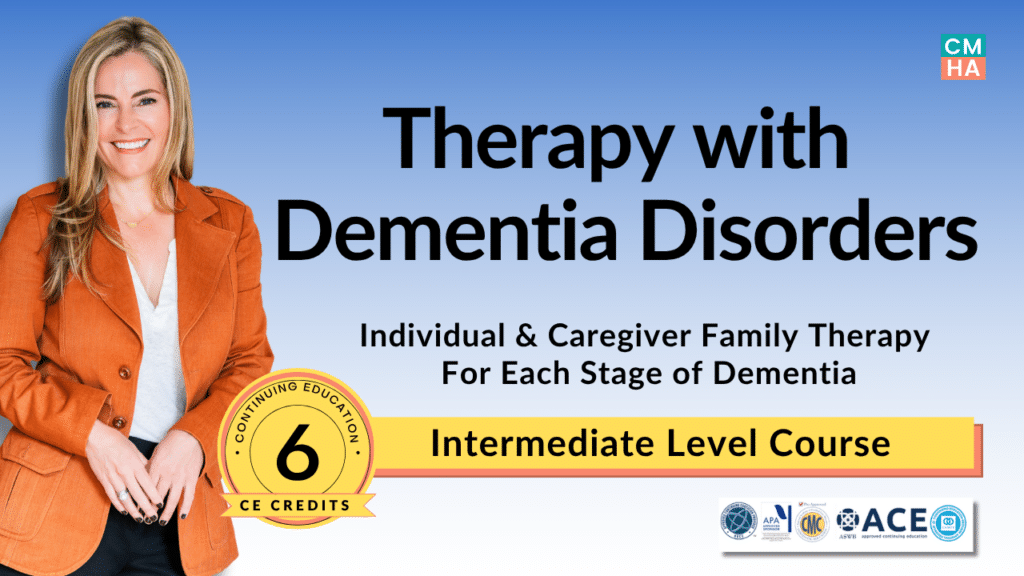
Therapy with Dementia Disorders: Individual Therapy + Caregiver Family Therapy for Every Stage of the Dementia Journey
Learn individual therapy and caregiver family therapy for people living with dementia and their family across the stages of dementia.
Build clinical skills for every stage of the dementia journey — from early memory loss and mild cognitive impairment to moderate dementia through advanced stages and end of life.
Learn more here