
In the field of geropsychology, it is well known that depression is both a risk factor for and an early symptom of dementia.
One of the most consistently missed diagnoses I see in clinical practice with older adults is depression in the context of dementia.
Not because clinicians don’t care. They do. But depression in dementia is easy to miss, easy to dismiss as “expected,” and — when it shows up in the early stages — easy to mistake for dementia itself.
Here’s what we know: depression is both a risk factor for dementia and an early symptom of it. When it goes untreated, things compound fast. Physical health deteriorates. Medication burden increases. Hospitalizations become more frequent. Suicide risk climbs. Family strain deepens. And cognitive decline accelerates.
Treating depression doesn’t just improve mood. It restores quality of life. It communicates to the person in front of you that their suffering is real — and that it matters enough to address. And as the research increasingly shows, treating depression may also do something we didn’t fully appreciate until recently: it may actually slow the progression of dementia.
This article is for clinicians working with older adults across the full dementia spectrum — from mild cognitive impairment (MCI) through moderate and advanced stages. I’ll walk through why depression is so easy to miss, which assessment tools to reach for at each stage, and how to treat it effectively within the context of cognitive impairment.
Depression in MCI: What the Research Shows
Treating depression in MCI — including with SSRIs — may do more than relieve mood symptoms. It may actually slow the progression from MCI to dementia.
A landmark study published in the American Journal of Psychiatry (Bartels et al., 2018) examined data from 755 nondepressed participants in the longitudinal Alzheimer’s Disease Neuroimaging Initiative. The findings were striking: in people with MCI who also had a history of depression, long-term SSRI use — defined as more than four years — was significantly associated with a delayed progression to Alzheimer’s dementia by approximately three years, compared to short-term SSRI treatment, other antidepressants, or no treatment at all. This held even after controlling for ApoE4 status and age.
Three years. For a person with MCI and depression, that’s potentially three additional years of independence, relationship quality, and meaningful life.
The MCI stage is a critical intervention window. This is when depression is both most treatable and most consequential for the long-term disease trajectory.
Depression significantly increases the risk of developing MCI (Ng et al., 2017; Raphael, 2025). A population-based study found that baseline depression predicted MCI onset even after controlling for sociodemographics, cognitive functioning, and comorbid physical health conditions (Muller et al., 2017). Untreated depression isn’t just painful — it may be accelerating cognitive decline.
Untreated depression isn’t just emotionally painful, it may be accelerating cognitive decline.
How Do Antidepressants Medications Protect the Brain from Dementia?
SSRIs may promote neurogenesis (the formation of new brain cells) in the hippocampus and shift amyloid processing toward non-amyloidogenic pathways. This reduces the neurotoxic burden that drives dementia disease progression (Cirrito et al., 2011; Bartels et al., 2018).
A large-scale retrospective cohort study using electronic health records from approximately two million patients further supported these findings, identifying citalopram, escitalopram, and SSRIs generally as associated with a reduced risk of progression to dementia in people with MCI (Xu et al., 2023).
The clinical implication is significant: when someone with MCI is also depressed, treating that depression isn’t just a quality-of-life intervention. It may be modifying the disease of dementia in the brain.
When Dementia Begins, Depression Often Comes With It
The earliest signs of dementia can look exactly like depression.
Before memory problems become obvious, before the family starts noticing lapses, many people in the early stages of neurodegenerative disease begin withdrawing. They lose interest in things they used to love. They stop reaching out. They sleep more. They feel hopeless about the future — sometimes in ways that are entirely connected to what’s beginning to happen in their brain.
This is where apathy and depression overlap.
What is Apathy?
Apathy is a persistent reduction in motivation, diminished initiative, and decreased emotional responsivity. Apathy is the most common neuropsychiatric symptom in Alzheimer’s disease, affecting anywhere from 19 to 76% of patients (Benoit et al., 2008). Apathy is also a symptom of depression.
What is Depression?
Depression is a close second, with prevalence rates across dementia stages ranging from 38% to 41% (Zhao et al., 2021).
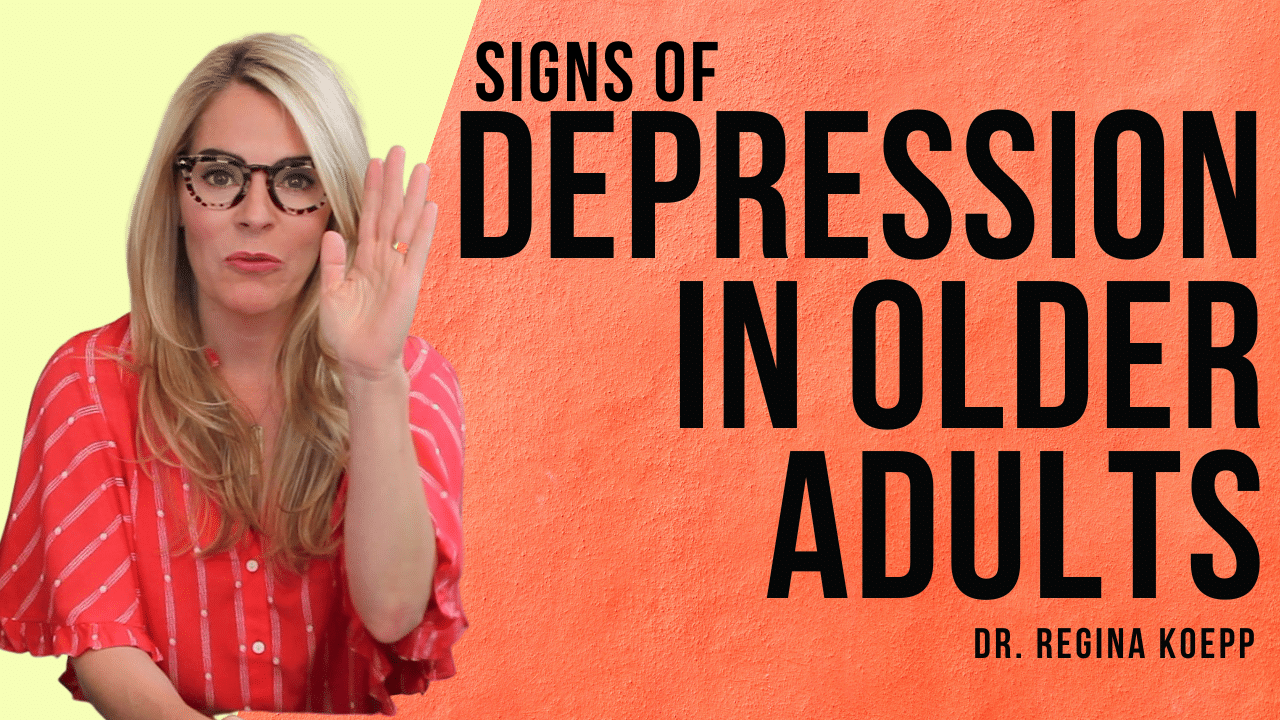
Here are the signs of depression in older adults:
- Persistent sadness or crying a lot
- Feeling worthless or helpless
- Feeling slowed down
- Excessive worries about finances and health problems
- Weight changes (due to changes in appetite- like gaining weight or losing weight)
- Restlessness (like pacing and fidgeting), or the opposite, being unusually still.
- Changes in sleep, like sleeping too much or too little.
- Difficulty concentrating
- Physical symptoms such as pain or GI problems.
- Withdrawal from regular social activities
In order to meet the criteria for a depressive disorder, the older adult only has to 5 of those symptoms lasting for 2 or more weeks AND these symptoms must affect how they are functioning. Like in friendships, relationships, with how they are taking care of themselves, or engaging engaging in activities.
Apathy and Depression Often Co-occur in Dementia
Dementia is not a normal part of aging. It is a chronic, progressive, and ultimately terminal neurodegenerative disease — and depression, anxiety, apathy, agitation, and psychosis are recognized neuropsychiatric symptoms of that disease.
The neuropsychiatric symptoms of dementia — often called behavioral and psychological symptoms of dementia, or BPSD — significantly affect the quality of life of the person with dementia, the functioning of their family, and the trajectory of care.
Research finds that up to 80% of individuals with early-stage Alzheimer’s disease or MCI present with at least one clinically significant neuropsychiatric symptom (Raphael, 2025).
When it comes to apathy and depression, approximately 14 to 38% of individuals with neurocognitive disorders (Goodarzi et al., 2017).
These symptoms deserve treatment. Not accommodation. Treatment.
The earliest signs of dementia are often apathy and depression — when treated, we can slow the dementia disease down, extending quality of life and independence.
How to Assess for Depression in Dementia?
Standard depression measures, like the PHQ-9, weren’t designed for people with cognitive impairment, and that’s a real problem. Self-report tools that require sustained attention, multi-step reasoning, or the ability to recall how you’ve been feeling over the past two weeks can produce unreliable results when cognition is compromised.
That’s why when it comes to cognitive impairment and dementia disorders, we need to be intentional about which screening tools we use.
The Geriatric Depression Scale–15 (GDS-15)
The GDS-15 is my go-to for screening depression in older adults with MCI and mild dementia. It uses a simple yes/no response format, which reduces cognitive load, and it deliberately excludes somatic items — like sleep and appetite — that are difficult to interpret in older adults with comorbid physical conditions (Nyunt et al., 2009).
Research confirms that the GDS-15 shows acceptable sensitivity and specificity in people with mild to moderate dementia (Marc et al., 2008). It’s quick to administer, easy for clients to understand, and can be repeated over time to track treatment response.
It’s also available in many different languages, from Arabic to Vietnamese.
Click here for the GDS in English and other available languages
That said, as dementia progresses and self-report becomes less reliable, the GDS-15 starts to lose its validity. This is where the Cornell Scale becomes essential.
The Cornell Scale for Depression in Dementia (CSDD)
The Cornell Scale for Depression in Dementia (CSDD; Alexopoulos et al., 1988) was specifically designed for use with people who have cognitive impairment. Rather than relying solely on what the patient can tell you, the CSDD combines a structured interview with the patient and a structured interview with an “informant” — usually a family member or care staff member.
A 2022 systematic review and meta-analysis of 20 studies involving 3,499 older adults confirmed that the CSDD demonstrates high diagnostic accuracy across the cognitive spectrum. A separate meta-analysis found the CSDD outperformed the GDS in populations with dementia, while the GDS performed better in those without (Park, 2022).
The CSDD uses a cut-off score of ≥8 for probable depression and covers five symptom domains:
- Mood-related signs like sadness, anxiety, and irritability
- Behavioral disturbance like restlessness or stillness
- Physical signs like loss of appetite or energy
- Cyclical functions like changes in sleep and wake patterns
- Ideational disturbance — meaning disturbances in thinking like suicidal thoughts, low self-esteem, or increased delusions
The informant interview becomes especially valuable when the person can no longer reliably report their own inner experience.
Click here for the Cornell Scale for Depression in Dementia (CSDD)
The Neuropsychiatric Inventory (NPI)
For advanced dementia, when self-report is no longer reliable, the Neuropsychiatric Inventory (NPI; Cummings et al., 1994) becomes a useful observational tool. Rather than asking the person with dementia how they feel, the NPI is administered to a caregiver — a family member or care staff member who knows the person well.
It assesses 12 neuropsychiatric symptom domains, including depression/dysphoria, anxiety, apathy, agitation, and irritability, rating both the frequency and severity of each symptom.
This makes it particularly well suited to tracking behavioral and mood changes in later-stage dementia, when traditional depression screening tools can’t be used.
A shorter version, the NPI-Q, is designed for routine clinical practice and can be completed by a caregiver in writing and then reviewed with a clinician.
Note: For non‑commercial clinical practice and unfunded academic use, the instruments are made available at no charge; commercial use (e.g., industry trials, commercial CE products) requires explicit licensing with Dr. Jeffrey Cummings. Learn more here
My practice
In my clinical work and in the training I do with clinicians, I generally use the GDS-15 in early stages when self-report is still intact, and shift to the CSDD as cognitive impairment progresses. Use both when you’re uncertain.
A Note on Assessing for Depression in the Context of Dementia
Assessment doesn’t end with screening scores. A thorough clinical interview, an informant report, and longitudinal observation are your best tools.

Click here to learn more about a Psychosocial toolkit for use with older clients
Psychotherapy for Depression in Dementia: Adapting Treatment to the Stage
Medication is one piece of the treatment picture. But psychotherapy — adapted thoughtfully to the person’s cognitive capacity and stage of illness — is equally important.
Here’s how I think about it: in early stages, psychotherapy with the individual is entirely appropriate and often highly effective. As dementia progresses, the therapeutic relationship expands to include the caregiver and family system. The person with dementia doesn’t drop out of the clinical picture — the frame simply widens.
Individual Psychotherapy in Early-Stage Dementia and MCI
People in the MCI and early dementia stages are still very much capable of engaging in meaningful therapeutic work. They can reflect on their experience, identify patterns, set goals, and develop coping strategies. Depression doesn’t take away that capacity — and neither does mild cognitive impairment.
Several psychotherapy approaches have a growing evidence base at this stage:
-
Cognitive Behavioral Therapy (CBT)
-
- CBT has the strongest evidence base for depression treatment in older adults generally, and this extends to people with MCI and early dementia. A 2025 meta-analysis of 15 RCTs (n=2,135) found CBT reduced neuropsychiatric symptoms in Alzheimer’s disease, with benefits for both the person and their caregiver (Forsteier et al., 2025). Adaptations for cognitive impairment include simplified homework, more repetition within sessions, concrete behavioral activation strategies, and active involvement of a care partner.
-
CORDIAL Program (CBT + Cognitive Rehabilitation + Reminiscence)
-
- A 2021 RCT of 198 people with MCI or early dementia evaluated the CORDIAL program — 11 individual weekly sessions combining CBT, cognitive rehabilitation, and reminiscence therapy. The intervention group showed significant reduction in depressive symptoms compared to treatment-as-usual (Orgeta et al., 2021).
- This multicomponent approach reflects the reality that people with early-stage dementia often respond well to interventions that honor their personal history alongside their present challenges.
-
Problem-Solving Therapy (PST)
-
- PST has demonstrated effectiveness for late-life depression, including in individuals with executive dysfunction — a common feature of early dementia. A home-delivered adaptation with caregiver involvement showed particular promise for those with early dementia and significant functional disability (Kiosses & Alexopoulos, 2014).
-
Reminiscence Therapy/ Life Review Therapy
-
- Drawing on life history and autobiographical memory — which tends to be more preserved than recent memory in early Alzheimer’s disease — reminiscence therapy offers a cognitively accessible entry point into therapeutic connection. It can reduce depressive symptoms and improve quality of life, and it pairs naturally with CBT and cognitive rehabilitation in multicomponent programs.
In all of these approaches, adaptations matter. Sessions may need to be shorter. Language needs to be simple and concrete. Written summaries of session content can support retention. And involving a trusted family member — as an observer or active participant — becomes increasingly important as the disease progresses.
Caregiver and Family Therapy in Middle and Later Stages
As dementia advances, the person with dementia may have diminishing capacity for structured individual therapy. But depression doesn’t necessarily diminish with it — and the relational and environmental context in which they live becomes the primary therapeutic lever.
This is where caregiver and family therapy steps in — not as a replacement for the person’s care, but as an extension of it.
Family caregivers of people with dementia experience elevated rates of depression, anxiety, and burden themselves (Plys et al., 2021). Their emotional state directly affects the quality of care they provide and the relational environment in which the person with dementia lives. When we treat the caregiver’s depression and equip them with more effective coping and communication strategies, we are, in a very real sense, treating the person with dementia.
Evidence-based approaches for family and caregivers include:
-
Caregiver family therapy
-
- structured dyadic or family sessions addressing communication, relationship dynamics, grief, and role adjustment. A 2025 RCT of the CBTAC program showed large within-subject effect sizes for clinician-rated depression (Forsteier et al., 2025). This is my personal favorite.
- Multicomponent programs
- combining psychoeducation, CBT, and caregiver support. A comprehensive meta-review of 60 systematic reviews found that depression was the most modifiable caregiver outcome across a spectrum of psychological interventions (Kasparek et al., 2020).
- CBT for caregivers
- targeting unhelpful thoughts about caregiving, behavioral activation, and stress management (Carretero-García et al., 2018).
- Acceptance and Commitment Therapy (ACT) for caregivers
- a values-based approach that helps caregivers respond with flexibility to the unpredictable stressors of dementia care, with a pilot study showing reductions in depressive symptoms, stressful reactions, and burden.
When we treat the caregiver’s stress and mental health concerns and equip them with more effective coping strategies, we are, in a very real sense, also treating the person with dementia.
Here’s a summary of how I think through depression treatment across the dementia spectrum:
MCI / Early-Stage Dementia
- Screen with GDS-15; supplement with CSDD if cognitive impairment is more prominent
- Evaluate for mental health conditions
- Recommend discussion of SSRI with medical provider (particularly citalopram or escitalopram) for depression with MCI — the evidence for delayed dementia progression is meaningful
- Offer individual psychotherapy: CBT, PST, reminiscence therapy, or a multicomponent approach like CORDIAL
- Introduce caregiver psychoeducation early — even before it feels urgently needed
Moderate Dementia
- Screen with CSDD as the primary depression screening tool; the informant interview becomes essential
- Continue medical provider engagement for pharmacotherapy as appropriate; monitor for side effects and drug interactions
- Shift the therapeutic focus to the family system; dyadic sessions when possible
- Use behavioral activation and environmental modifications to reduce depressive symptoms
- Address caregiver stress and depression as a clinical target in its own right
Advanced Dementia
- Use observational measures — behavioral indicators, NPI ratings, informant report — rather than self-report
- Prioritize comfort, meaningful activity, and environmental calm
- Support caregiver grief, including anticipatory grief and ambiguous loss
- Continue to treat observed distress; non-pharmacological interventions for behavior and affect remain appropriate
The Bottom Line
Depression in dementia is common, underdiagnosed, and eminently treatable. The mistake we make too often as a field is assuming that because cognitive decline is expected, emotional suffering is too. It isn’t. Failing to offer treatment is cruel and unnecessary.
The mistake we make too often as a field is assuming that because cognitive decline is expected, emotional suffering is too. It isn’t. Failing to offer treatment is cruel and unnecessary.
The research is clear: treating depression in MCI — with SSRIs, psychotherapy, or both — matters for quality of life, caregiver wellbeing, and for the long-term trajectory of cognitive decline itself.
For those of us specializing in aging, every person with dementia who comes into our clinical orbit deserves to have their depression taken seriously, assessed accurately, and treated at every stage of the disease.
Keep Learning – Take My CE Course
If you’d like to learn more about providing therapy to people living with dementia and their families, take my on-demand 6-hour course on Therapy with Dementia Disorders: Individual + Caregiver Family Therapy Across the Stages of Dementia

Related Articles
- What Is Mild Cognitive Impairment — And How Can Psychotherapy Help?
- Supporting People with Dementia Who Live Alone: Must Have Resources
- “What can I do to keep my brain healthy?” – Global Council on Brain Health Answers
- Suicide Risk After Dementia: Why the First Months Are Most Dangerous
- How to Prevent Dementia: 14 New Strategies Revealed
- Depression Treatment Prevents Dementia — According to Science
- Why Therapy Needs to Change With Age
References
- Alexopoulos, G. S., Abrams, R. C., Young, R. C., & Shamoian, C. A. (1988). Cornell Scale for Depression in Dementia. Biological Psychiatry, 23(3), 271–284. https://doi.org/10.1016/0006-3223(88)90038-8
- Bartels, C., Wagner, M., Wolfsgruber, S., Fliessbach, K., Fröhlich, L., & Jessen, F. (2018). Impact of SSRI therapy on risk of conversion from mild cognitive impairment to Alzheimer’s dementia in individuals with previous depression. American Journal of Psychiatry, 175(3), 232–241. https://doi.org/10.1176/appi.ajp.2017.17040404
- Benoit, M., Robert, P. H., Staccini, P., Brocker, P., Guérin, O., Lechowski, L., & Vellas, B. (2008). One-year longitudinal evaluation of neuropsychiatric symptoms in Alzheimer’s disease. Journal of Nutrition, Health & Aging, 12(2), 116–120. https://doi.org/10.1007/bf02982565
- Cirrito, J. R., Disabato, B. M., Restivo, J. L., Verges, D. K., Goebel, W. D., Sathyan, A., Hayreh, D., D’Angelo, G., Benzinger, T., Yoon, H., Kim, J., Morris, J. C., Mintun, M. A., & Sheline, Y. I. (2011). Serotonin signaling is associated with lower amyloid-β levels and plaques in transgenic mice and humans. Proceedings of the National Academy of Sciences, 108(36), 14968–14973. https://doi.org/10.1073/pnas.1107411108
- de Medeiros, K., Robert, P., Gauthier, S., Stella, F., Politis, A., Leoutsakos, J., Taragano, F., Kremer, J., Brugnolo, A., Porsteinsson, A. P., Geda, Y. E., Brodaty, H., Gazdag, G., Cummings, J., & Lyketsos, C. (2010). The Neuropsychiatric Inventory-Clinician rating scale (NPI-C): reliability and validity of a revised assessment of neuropsychiatric symptoms in dementia. International psychogeriatrics, 22(6), 984–994. https://doi.org/10.1017/S1041610210000876
- Forsteier, S., Maercker, A., Bohli, L., Savaskan, E., & Roth, T. (2025). Cognitive behavioural treatment for mild Alzheimer’s patients and their caregivers (CBTAC): Results of a randomised controlled trial. Aging & Mental Health, 29(2), 359–368. https://doi.org/10.1080/13607863.2024.2393748
- Goodarzi, Z. S., Mele, B. S., Roberts, D. J., & Holroyd-Leduc, J. (2017). Depression case finding in individuals with dementia: A systematic review and meta-analysis. Journal of the American Geriatrics Society, 65(5), 937–948. https://doi.org/10.1111/jgs.14713
- Ismail, Z., Elbayoumi, H., Fischer, C. E., Hogan, D. B., Millikin, C. P., Schweizer, T., Mortby, M. E., Smith, E. E., Patten, S. B., & Fiest, K. M. (2017). Prevalence of depression in patients with mild cognitive impairment: A systematic review and meta-analysis. JAMA Psychiatry, 74(1), 58–67. https://doi.org/10.1001/jamapsychiatry.2016.3162
- Kasparek, T., Tomagóvá, M., & Baliharova, V. (2020). A comprehensive meta-review of systematic reviews and meta-analyses on nonpharmacological interventions for informal dementia caregivers. Neuropsychiatric Disease and Treatment, 16, 435–456. https://doi.org/10.2147/NDT.S235480
- Kiosses, D. N., & Alexopoulos, G. S. (2014). Problem-solving therapy in the elderly. Current Treatment Options in Psychiatry, 1(1), 15–26. https://doi.org/10.1007/s40501-013-0003-0
- Landes, A. M., Sperry, S. D., & Strauss, M. E. (2005). Prevalence of apathy, dysphoria, and depression in relation to dementia severity in Alzheimer’s disease. Journal of Neuropsychiatry and Clinical Neurosciences, 17(3), 342–349. https://doi.org/10.1176/jnp.17.3.342
- Marc, L. G., Raue, P. J., & Bruce, M. L. (2008). Screening performance of the 15-item geriatric depression scale in a diverse elderly home-care population. American Journal of Geriatric Psychiatry, 16(11), 914–921. https://doi.org/10.1097/JGP.0b013e318186bd67
- Matsumoto, H., Kato, H., Ogawa, Y., & Imai, A. (2022). Predictive validity of the Cornell Scale for depression in dementia among older adults with and without dementia: A systematic review and meta-analysis. Psychiatry Research, 310, 114445. https://doi.org/10.1016/j.psychres.2022.114445
- Muller, M., Aleman, A., Grobbee, D. E., de Haan, E. H., & Scheltens, P. (2017). The impact of depression on the development of mild cognitive impairment over 3 years of follow-up: A population-based study. Dementia and Geriatric Cognitive Disorders Extra, 7(1), 1–11. https://doi.org/10.1159/000450382
- Ng, T. P., Feng, L., Nyunt, M. S., Feng, L., Gao, Q., Lim, M. L., Collinson, S. L., Chong, M. S., Lim, W. S., Lee, T. S., Yap, K. B., & Yap, P. (2017). Metabolic syndrome and the risk of mild cognitive impairment and progression to dementia. JAMA Neurology, 73(4), 456–463. https://doi.org/10.1001/jamaneurol.2015.4899
- Nyunt, M. S., Fones, C., Niti, M., & Ng, T. P. (2009). Criterion-based validity and reliability of the Geriatric Depression Screening Scale (GDS-15) in a large validation sample of community-living Asian older adults. Aging and Mental Health, 13(3), 376–382. https://doi.org/10.1080/13607860902861027
- Orgeta, V., Leung, P., Del-Pino-Casado, R., Qazi, A., Orrell, M., Spector, A., & Methley, A. (2021). Managing depressive symptoms in people with mild cognitive impairment and mild dementia with a multicomponent psychotherapy intervention: A randomized controlled trial. International Psychogeriatrics, 33(3), 199–213. https://doi.org/10.1017/S1041610220001271
- Park, M. (2022). Which of the Cornell Scale for Depression in Dementia or the Geriatric Depression Scale is more useful to screen for depression in older adults? Geriatric Nursing, 46, 67–72. https://doi.org/10.1016/j.gerinurse.2022.04.015
- Plys, E., Williams, K. N., Tyrrell, C. J., & Weiskittle, R. (2021). Development and initial evaluation of the Caring Through COVID-19 psychotherapy group for family care partners. Innovation in Aging, 5(Suppl 1), 946. https://doi.org/10.1093/geroni/igab046.2947
- Raphael, D. D. L. (2025). Neuropsychiatric symptoms in mild cognitive impairment and early Alzheimer’s disease: Clinical pattern and diagnostic implications. AIMS Neuroscience. https://doi.org/10.3934/Neuroscience.2025032
- Xu, H., Lupancu, M., Ramos, M., & Weng, C. (2023). Comparing the effects of four common drug classes on the progression of mild cognitive impairment to dementia using electronic health records. Scientific Reports, 13, 8348. https://doi.org/10.1038/s41598-023-35258-6
- Zhao, Q., Tan, L., & Yu, J. T. (2021). Prevalence of depression, anxiety, and apathy symptoms across dementia stages: A systematic review and meta-analysis. Journal of Affective Disorders, 283, 310–320. https://doi.org/10.1016/j.jad.2021.01.059

Dr. Regina Koepp is a board certified clinical psychologist, clinical geropsychologist, and founder and CEO of the Center for Mental Health & Aging: the “go to” place for mental health and aging. Dr. Koepp is a sought after speaker on the topics of mental health and aging, caregiving, ageism, resilience, intimacy in the context of life altering Illness, and dementia and sexual expression. Dr. Koepp is on a mission to ensure mental health and belonging for older adults, because every person at every age is worthy of healing, transformation, and love. Learn more about Dr. Regina Koepp here.
Regina Koepp, PsyD, ABPP






























































































Want More? Read Our Most Recent Posts


Older adults deserve high quality mental health care.
Therapists deserve the training to provide that care.