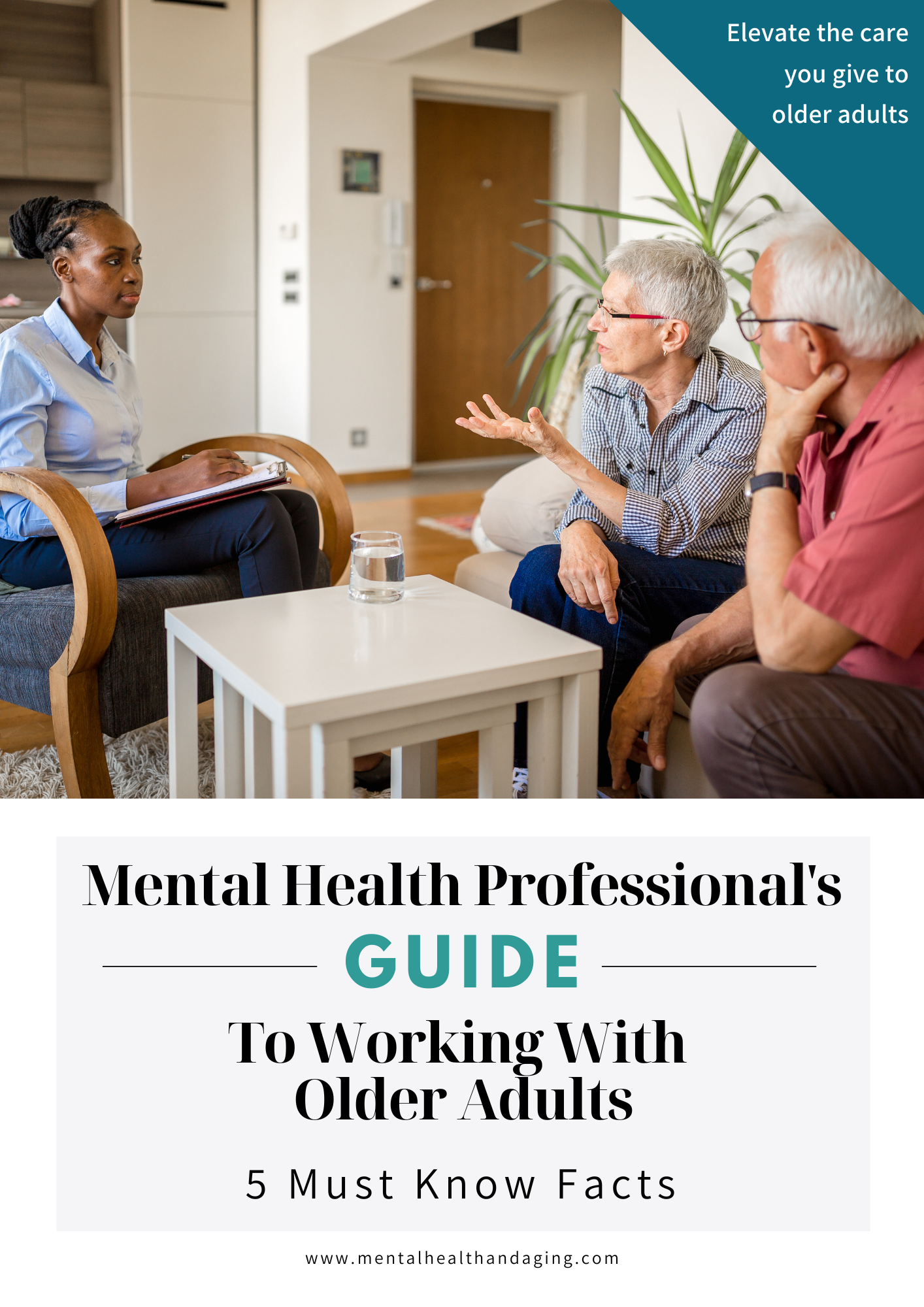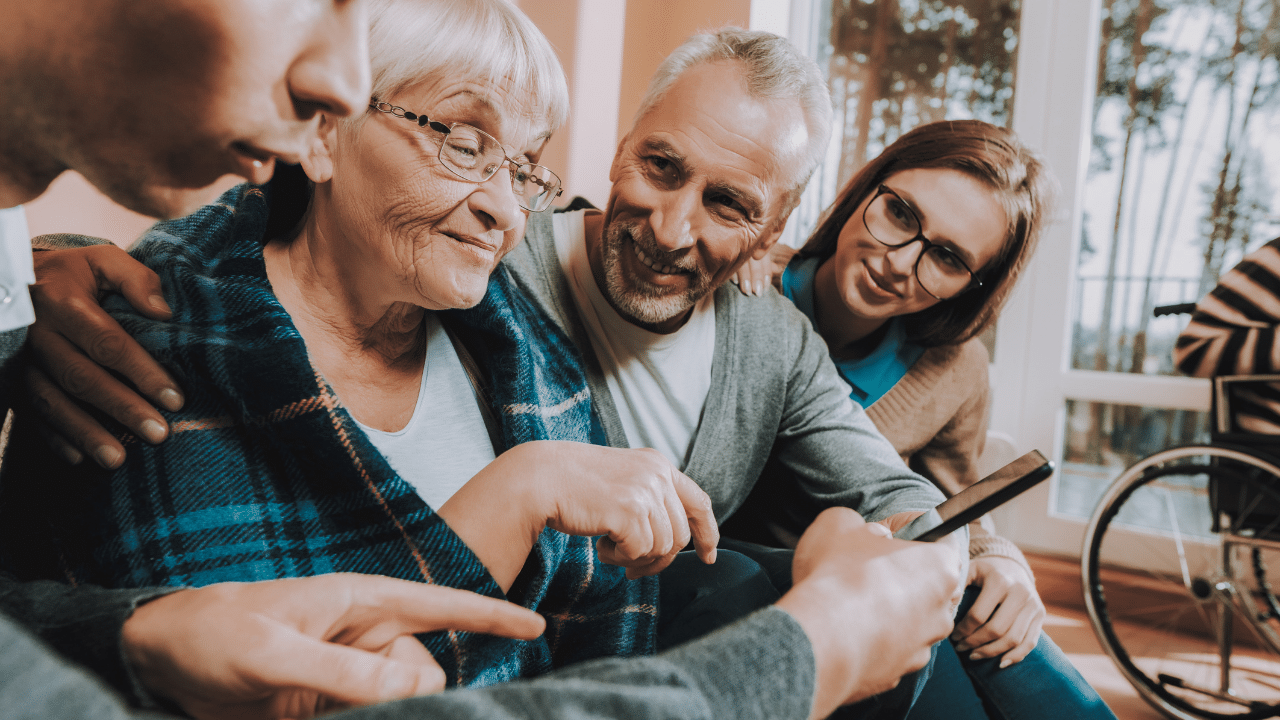
I’ve been providing psychotherapy to older adults for more than 20 years. And one of the things that has never stopped breaking my heart is how often older adults do not get the mental health care they need, resulting in unnecessary suffering.
Depression that goes untreated for years. Anxiety chalked up to “just getting older.” Grief that goes unwitnessed. The mental health needs of older adults are real, serious, and treatable.
Mental health conditions are treatable in older adulthood. I say this to every clinician I train and consult with, because it bears repeating.
And yet: up to 70% of older adults diagnosed with depression or anxiety never seek professional support (Byers et al., 2012). Seventy percent.
A new study published in Aging & Mental Health (Prindiville et al., 2026) is helping us understand why — and, more importantly, what actually gets in the way of older adults reaching out for mental health care.
The findings have real implications for clinicians, for families, and for every older adult who has told themselves their struggles aren’t “bad enough” to deserve help.
The Hidden Cost of Untreated Mental Health Conditions in Later Life
Before I get into the study, something I talk about constantly: untreated mental health conditions in later life aren’t only about emotional suffering. They are a public health crisis with downstream consequences that ripple into physical health, quality of life, and — critically — brain health.
Depression in midlife and later life is a modifiable risk factor for dementia. This means when we treat depression, we’re not only reducing suffering today — we may be protecting cognitive function for years to come. The same is true for untreated anxiety, unresolved trauma, and disrupted sleep, all of which are linked to elevated dementia risk.
This is why help-seeking isn’t a minor administrative detail. It is a matter of brain health. When an older adult delays or avoids seeking support, the cost of that delay compounds over time.
Up to 70% of older adults with mental health concerns do not get the mental health care they need.
What Actually Determines Whether Older Adults Ask for Help
Researchers in Australia surveyed 390 community-dwelling adults aged 60 and older to understand what predicts whether older adults actually seek help for mental health concerns — specifically whether their beliefs about their conditions and treatments matter, even after accounting for the barriers we already know about: stigma, cost, ageism, and the perception that primary care providers won’t refer them to a specialist.
They used the Common Sense Model of Self-Regulation (CSM) — a well-established health behavior framework that proposes people make decisions about addressing health threats based on their beliefs about those threats:
- Do I believe this is serious?
- Do I believe it will last?
- Do I believe treatment will actually help?
They measured four outcomes:
- Intentions to seek formal help (from a doctor or mental health professional)
- Actually sought formal help
- Intentions to seek informal help (from family or friends)
- Actually sought informal health
Here’s what they found:
Older adults who believed that professional treatment would actually work were significantly more likely to both intend to seek formal help and to actually do it — even when other factors like cost, transportation, PCP reluctance to refer, and stigma were accounted for (Prindiville et al., 2026).
“Does therapy even work for someone my age?” — How the person answers this question may be the most powerful predictor of that person seeking mental health care.
In this study, stigma did not independently predict help-seeking once other variables were controlled for. Beliefs about treatment effectiveness did.
Much of the public conversation around mental health help-seeking focuses on reducing stigma, and that work is important. But this study suggests that for older adults specifically, the more pressing barrier may be a more fundamental doubt: Does this even work for someone like me?
It does. Research consistently shows that older adults benefit from therapy just as much as younger adults do (Jonsson et al., 2016). The treatments work. The brain CAN change. Recovery is possible at every age.
The problem is that many older adults don’t believe this — because no one has told them clearly enough, or often enough, that it’s true.
Why Older Adults Turn to Family Instead of Professionals
The study also found that older adults who attributed their mental health struggles to life circumstances, rather than to a disorder, were more likely to turn to a spouse, friend, or family member (Prindiville et al., 2026).
This makes intuitive sense. When someone is grieving a loss, navigating retirement, or adjusting to physical changes, they may think: “Of course I’m sad — look at what I’m going through.” That framing makes informal support feel more natural: a conversation with a daughter, a social group, leaning on a friend. These are normalized, practical responses to hard chapters of life.
And connection is genuinely protective. Social engagement in later life is linked to better mood, reduced depression symptoms, and lower dementia risk. This isn’t a bad outcome. The concern is when informal support becomes a substitute for professional care — especially when symptoms are more serious.
Interestingly, the belief that one’s PCP would not support a mental health referral was associated with lower intentions to seek both formal and informal help. When older adults feel dismissed at the primary care level, they may disengage from help-seeking altogether — not just from professional care, but from reaching out at all.
Why Older Adults Don’t Seek Help Even When Symptoms Are Serious
In this study, the presence of depression symptoms, anxiety symptoms, and even cognitive complaints did not predict help-seeking intentions or behavior on their own (Prindiville et al., 2026).
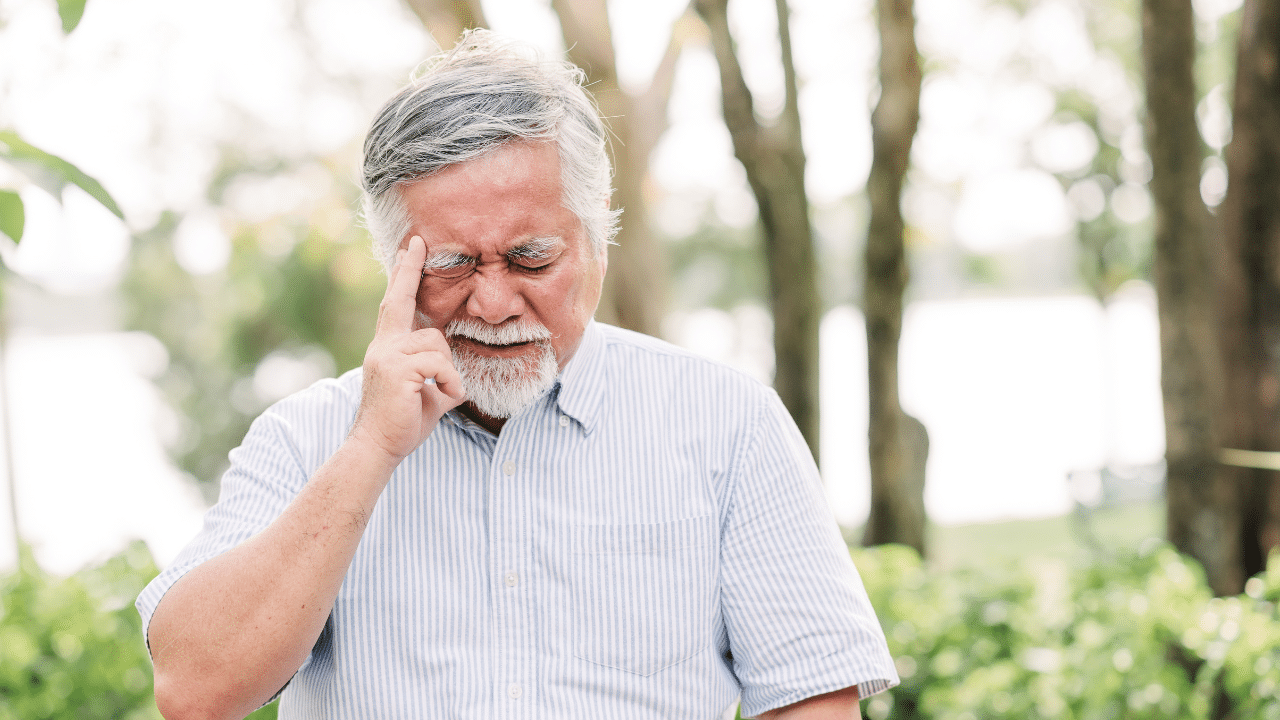
What did predict formal help-seeking was the belief that one’s behaviors were changing, like they were becoming more rigid or more withdrawn. In other words, older adults were more likely to notice a problem when they could see the evidence of it in their own behavior.
Internal distress alone often doesn’t feel like enough of a reason to seek help. Many older adults have developed tremendous resilience. They’ve weathered hard things before. They tell themselves they should be able to manage this on their own. It’s when the distress starts showing up in ways that affect the people around them, or feel clearly out of character, that the need for help starts to feel legitimate.
Scripts for Clinicians: How to Talk to Older Adults About Mental Health Treatment
This research suggests that the most powerful thing you can do is directly address beliefs about treatment effectiveness. Don’t assume your older clients or their families know that therapy works for people their age. Here are some approaches I use and share with the clinicians I consult with, feel free to use them in your work:
Set the stage: “When I talk about treatment for [depression/anxiety/alcohol use] with clients over 70, they sometimes say, ‘I don’t know if treatment would ever work for someone my age.’ Can you relate to that?”
[Pause and let them answer.]
Ask: “Would you be open to hearing what we know about treatment for [depression/anxiety] now?”
Normalize: “What you’re experiencing is a human condition that deserves attention and care. Depression and anxiety are health conditions — just like diabetes. It would be a shame to deny you mental health care the same way it would be wrong to withhold insulin from someone who needs it.”
Say it plainly: “Treatment for anxiety and depression is effective at every age — including for people in their 80s and 90s. It can involve therapy, medication, or both.”
Share the evidence: “Research shows that treating depression and anxiety in middle age and later life reduces the risk for dementia and physical health problems now AND in the long run.”
A Simple Screening Approach for Mental Health in Older Adult Primary Care Visits
The opportunity in primary care settings is enormous. Consider intentional mental health campaigns that communicate the effectiveness of mental health treatment for older adults. Doing this right where they’re already receiving healthcare, can meet people where they are. This educates patients and signals to PCPs that mental health is a priority worth addressing.
In addition to having a screening tool, like a PHQ-2 or PHQ-9, it’s worth adding some mental health questions and providing some psychoeducation that helps older adults recognize how depression or anxiety shows up in their daily patterns (e.g., routines, relationships, habits). This might make it easier for them to recognize when something has shifted enough to warrant reaching out.
Here’s an idea of how to go about this:
“I want to ask you a few questions about how you’ve been doing lately — not just how you’re feeling inside, but what you’ve been doing day to day. Sometimes the clearest sign that something has shifted is a change in our habits or routines, even before we can name what’s wrong emotionally.”
- Routines
- “Have your daily habits changed recently? For example — are you sleeping differently, eating less, skipping things you usually do?”
- Relationships
- “Are you reaching out to people as much as you usually do? Or have you been pulling back a little — seeing friends less, not returning calls? Have you been your usual self in relationships? Feeling edgy? Snapping more than usual?”
- Activities
- “Are there things you’ve stopped doing that used to matter to you — hobbies, going to religious services, getting outside?”
- Energy and motivation
- “Do you find yourself sitting more, doing less — not because your body won’t cooperate, but because it’s hard to get started?”
If they say yes to any of these, you can reflect it back:
- “What you’re describing — pulling back, losing interest, doing less — those are often signs that something is going on emotionally that deserves attention. That’s your mind and body’s way of telling you something’s off.”
What to Say to an Older Parent Who Won’t Seek Mental Health Care When There’s a Problem
If you have an older parent, partner, or loved one who has been struggling, the research gives you something specific to do: talk to them about it.
Many older adults have internalized the belief that mental health treatment is for other people, younger people, people with “real” problems. Gently, lovingly, and persistently offering a different message can be very helpful in shifting the mindset around this.
Share with them that mental health care works at every age (this includes therapy, medication, or both). That this isn’t about being broken, it’s about having access to tools that are proven to help. That getting support now is not surrendering to decline; it’s investing in the life they deserve.
Then, stay connected. Show up, check in. For an older adult who believes their distress is “just life,” knowing that someone who loves them takes it seriously enough to say “let’s find someone to talk to” can be the thing that shifts intention into action.
We Each Have an Important Role
Whether you’re a clinician or a concerned family member, you have an important role in helping to shift narratives and belief systems around mental health and aging.
When mental health conditions go untreated, there’s a cascade of physical, psychological and cognitive decline that follows. The good news! We can do something about it.
Beliefs about mental health care being effective for older adults don’t change on their own. They change because someone in a person’s life — a therapist, a social worker, a doctor, a daughter, a neighbor — said something different. Said it clearly. Said it more than once.
Whether you’re sitting across from an older client in a therapy room or sitting across from your mother at the kitchen table, you have the ability to influence what that person believes about who is capable of benefiting from mental health care. And who is deserving of it.
It’s only with your help that older adults will get the mental health care they need and deserve. Thank you for being here and doing your part.
Related Articles
- Is Late Life Depression Treatable?
- Link Between Trauma and Dementia: Can Unresolved Trauma Increase Dementia Risk?
- Sleep and Dementia: Is Insomnia Quietly Raising the Risk for Dementia?
- Link Between Alcohol & Dementia: Does Moderate Drinking Increase Dementia Risk?
- Anxiety & Dementia: Anxiety Treatment is Essential to Reducing Dementia Risk
- Depression Treatment Prevents Dementia — According to Science
- Why Therapy Needs to Change With Age – Therapy That Works for 30-Year-Olds Doesn’t Always Work at 75
References
- Byers, A. L., Arean, P. A., & Yaffe, K. (2012). Low use of mental health services among older Americans with mood and anxiety disorders. Psychiatric Services, 63(1), 66–72. https://doi.org/10.1176/appi.ps.201100121
- Jonsson, U., Bertilsson, G., Allard, P., Gyllensvärd, H., Söderlund, A., Tham, A., & Andersson, G. (2016). Psychological treatment of depression in people aged 65 years and over: A systematic review of efficacy, safety, and cost-effectiveness. PLOS ONE, 11(8), e0160859. https://doi.org/10.1371/journal.pone.0160859
- Prindiville, P., Bhar, S., McNeill, I., Nedeljkovic, M., & Schofield, P. (2026). Breaking down barriers: Exploring mental health beliefs and help seeking in older adults. Aging & Mental Health. https://doi.org/10.1080/13607863.2026.2631444

Dr. Regina Koepp is a board certified clinical psychologist, clinical geropsychologist, and founder and CEO of the Center for Mental Health & Aging: the “go to” place for mental health and aging. Dr. Koepp is a sought after speaker on the topics of mental health and aging, caregiving, ageism, resilience, intimacy in the context of life altering Illness, and dementia and sexual expression. Dr. Koepp is on a mission to ensure mental health and belonging for older adults, because every person at every age is worthy of healing, transformation, and love. Learn more about Dr. Regina Koepp here.
Regina Koepp, PsyD, ABPP




















































Want More? Read Our Most Recent Posts


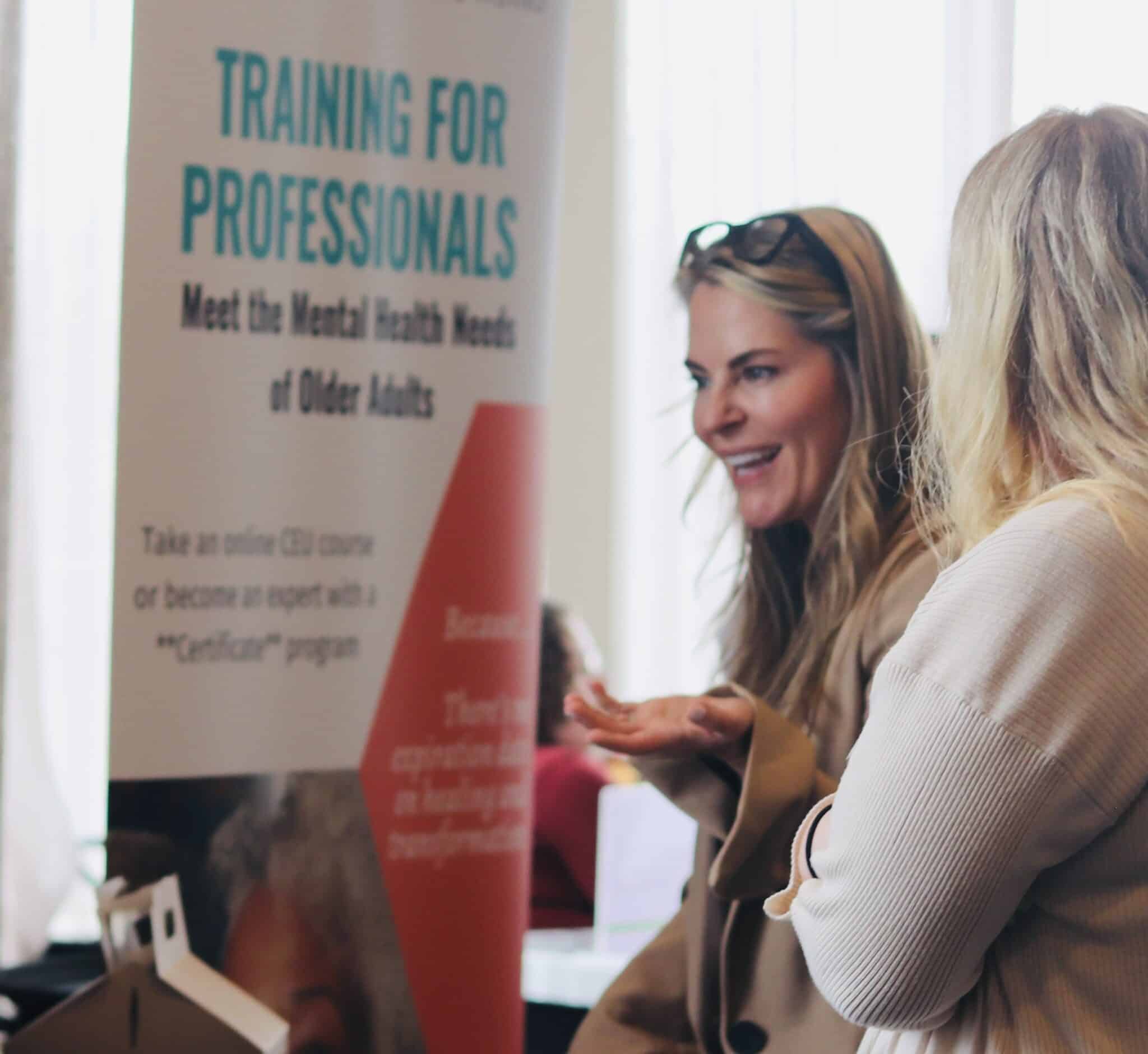
Older adults deserve high quality mental health care.
Therapists deserve the training to provide that care.